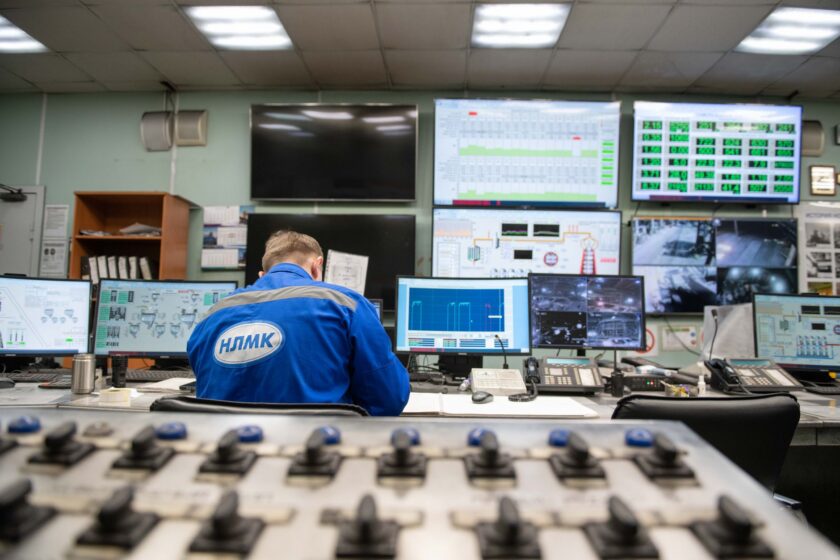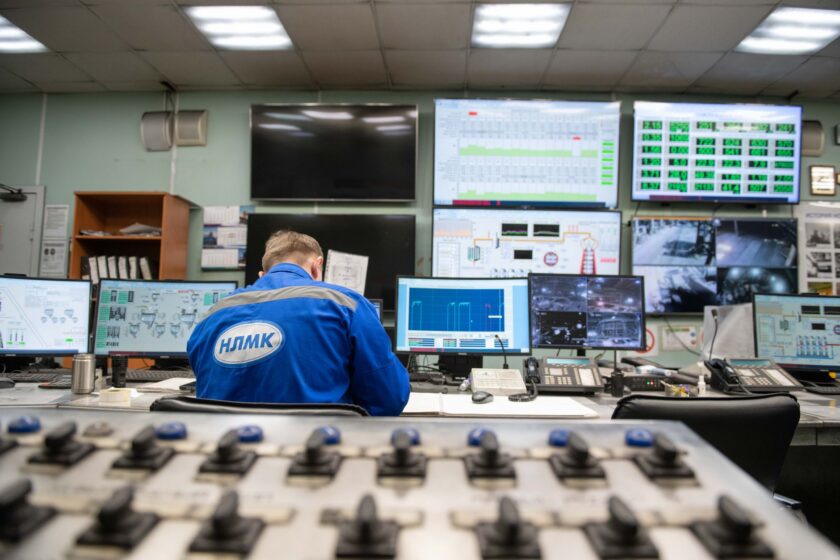
Every digital twin demo you’ve sat through in the last couple of years has followed the same arc: gorgeous ray-traced factory floor, robots swinging in real time, some phrase like “unified twin” or “living digital thread” on a slide, and a strong implication that if you’re not simulating photon-accurate light bounce off your conveyor guards, you’re behind. NVIDIA Omniverse, Siemens Xcelerator, and the growing ecosystem of Asset Administration Shell (AAS) based twin standards are all, in different ways, pushing plants toward higher-resolution, higher-fidelity, more unified simulation environments. Some of that is genuinely useful. A lot of it is fidelity you’re being sold that your actual use case never asked for.
This is the pattern worth naming: fidelity creep. It’s the digital twin equivalent of buying a CNC machine tolerance you don’t need because the salesperson only stocks the expensive spindle. And it’s a real project risk, not just an aesthetic complaint — because fidelity is not free. Every increment of geometric detail, physics accuracy, or update frequency you add to a twin drags a proportional (often more than proportional) increase in data pipeline complexity, compute budget, integration surface area, and ongoing maintenance burden behind it.
Fidelity is a cost curve, not a feature
It helps to stop thinking of “fidelity” as a single dial and break it into the three things that actually cost you money and time:
- Geometric fidelity — is this a block diagram, a simplified kinematic model, or full CAD-accurate mesh geometry with material properties?
- Temporal/physics fidelity — are you modeling discrete events (a part moves from station A to station B), or continuous physics at millisecond resolution (torque, collision response, thermal dynamics)?
- Data fidelity — is the twin fed by periodic batch exports, or does it require a live OPC UA / MQTT Sparkvector B tag stream reconciled against a real-time historian, with the integration and IT/OT security work (think IEC 62443 zoning) that comes with that?
Every one of those dials, cranked up, buys you something real. It also buys you a bigger integration project, a bigger compute footprint, and more things that can break when a PLC firmware update changes a tag address or a CAD model gets revised upstream. The question a practitioner should be asking isn’t “how high-fidelity can we make this twin.” It’s “what’s the cheapest fidelity that still produces a trustworthy answer to the decision I’m making.”
Match the twin to the decision, not the other way around
Different plant decisions have wildly different fidelity requirements, and conflating them is where most projects overbuild.
Scheduling and line balancing
If you’re deciding shift patterns, buffer sizing, or throughput bottlenecks, you need a discrete-event simulation: stations, cycle times, queue dynamics, failure/repair distributions. This is classic ISA-95-adjacent operational modeling. You do not need CAD-accurate robot arms or photorealistic rendering to figure out that Station 4 is starving Station 5. Tools built for discrete-event simulation have existed for decades and remain the right-sized answer here. Bolting a scheduling model onto a full geometric twin because the platform bundles both doesn’t make the schedule more accurate — it just makes the model slower to update and more fragile to maintain.
Layout and material flow
Layout decisions — where does the new cell go, does the AGV path clear the racking, will this line fit in the building — genuinely benefit from geometric fidelity. You’re making a spatial decision, so you need spatial accuracy. But you still don’t need millisecond physics or live production data feeds. A well-dimensioned static or coarse-timestep 3D model, refreshed on a project cadence rather than a real-time one, is the right fidelity. This is a place where Omniverse-style visualization genuinely earns its keep, because the decision is inherently visual and spatial.
Predictive maintenance
PdM twins live or die on data fidelity, not geometric fidelity. What you need is high-quality, high-frequency sensor data — vibration, temperature, current draw — correlated against failure history, feeding a model that flags degradation trends. Nobody needs a photorealistic render of the bearing to predict it’s about to fail. This is the use case most vulnerable to being oversold a “unified plant twin” when what actually solves the problem is a tight, well-instrumented asset model and a decent time-series pipeline.
Safety and collision validation
Here, and really only here, do you need the full stack: CAD-accurate geometry, real physics engines, tight timestep resolution. Robot cell collision validation, human-robot collaboration zones, and functional safety validation genuinely require simulating real kinematics and real contact physics, because the cost of being wrong is a safety incident, not a scheduling miss. This is the legitimate home turf for high-fidelity physics simulation, and it’s also usually a bounded, cell-level scope rather than a whole-plant one — another place fidelity creep sneaks in, by trying to extend safety-grade fidelity across an entire facility “while we’re at it.”
Where integration debt actually comes from
The reason fidelity creep stalls projects isn’t the simulation software itself — it’s the data plumbing underneath it. A twin that wants live tag data from every PLC on the floor, reconciled against MES work orders and ERP schedules, needs a real integration architecture: a historian or unified namespace, OPC UA servers properly modeled (ideally against a real information model rather than flat tags), and a security posture that satisfies plant IT before any of that data leaves the OT network. That’s a legitimate, valuable investment when the decision demands it. It’s dead weight when you built a photorealistic plant twin to answer a question that a spreadsheet-grade discrete-event model could have answered in a fraction of the time.
AAS-based twin standards are actually a genuine step forward here, because they let you scope fidelity at the asset level — a sub-model for geometry, a separate sub-model for maintenance data, another for operational parameters — rather than forcing everything into one monolithic high-fidelity blob. Use that modularity deliberately. Don’t populate every AAS submodel just because the schema supports it.
A rough checklist before you scope a twin
- Write down the specific decision the twin needs to support, in one sentence. If you can’t, you’re not ready to build.
- Identify which of the three fidelity dials (geometry, physics/time, data) that decision actually depends on. Usually it’s one, sometimes two, almost never all three.
- Set the other dials to the cheapest setting that doesn’t break trust in the result — and say so explicitly in the project scope, so nobody quietly upgrades it later.
- Separate the visualization budget from the decision-support budget. A gorgeous render that stakeholders love is a legitimate communication tool, but don’t let it dictate the underlying model’s fidelity.
- Revisit fidelity only when the decision changes. A layout twin doesn’t need to become a live-data twin just because someone suggests it could also do predictive maintenance.
None of this is an argument against high-fidelity twins. Robot cell safety validation genuinely needs the physics. Complex layout decisions genuinely benefit from real geometry. The platforms pushing toward unified, high-resolution twins aren’t wrong that the capability is real and improving. The mistake is letting the platform’s ceiling become your project’s floor. Scope the twin to the decision, price the integration honestly, and resist the demo. Your scheduling model doesn’t need to look like a movie to tell you Station 4 is the problem.
This article was written with the assistance of artificial intelligence. While we aim for accuracy, the information may be incomplete, out of date, or incorrect, and should be independently verified before you rely on it for any decision. It is provided for general information only and does not constitute professional advice.